Credit Card Debt Crisis: Why 46% Hit Their Limit
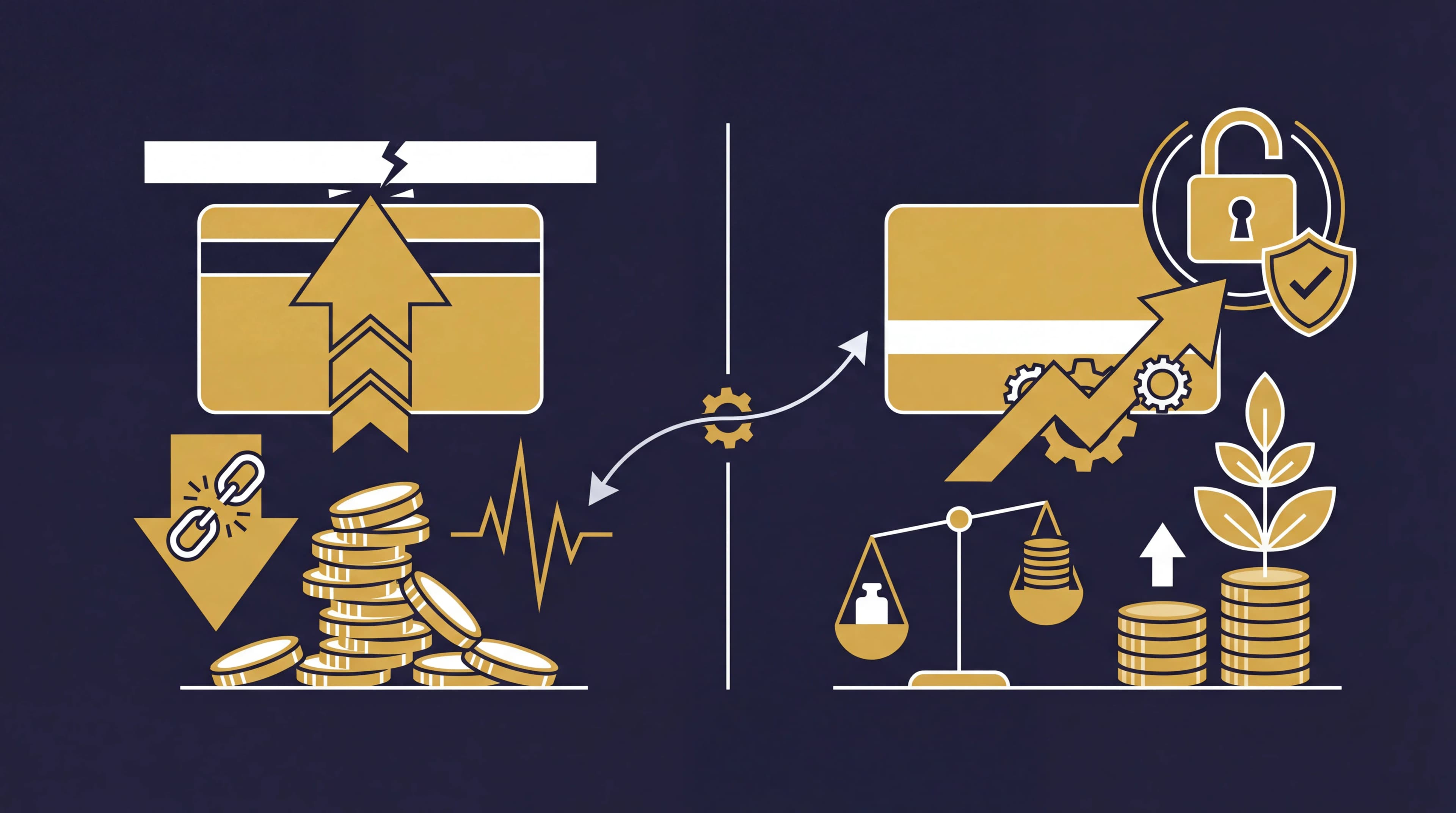
Credit Card Debt Crisis: Why 46% Hit Their Limit
Logging into your banking app and seeing your credit card balance hovering dangerously close to your limit is a uniquely stressful experience. Your stomach drops. You start doing mental math to figure out how much of your next paycheck has to go toward the bill just to keep the account in good standing.
If you have found yourself in this position recently, take a deep breath. You are participating in a massive, nationwide trend. Americans are maxing out their credit cards primarily due to unexpected emergency expenses and the rising cost of daily living outpacing wages. To fix it, you need a strategic repayment plan like the debt avalanche or snowball method to regain control of your finances.
According to the Federal Reserve (2025), Americans are carrying a collective $1.277 trillion in credit card debt. That is an all-time high. More importantly, this is not just a story about a few people making bad choices. The Federal Reserve's recent analysis of household finances shows that 46 percent of credit card owners carried a balance at least once during the prior twelve months. Recent data from late 2025 shows that number has crept up to 47 percent.
Nearly half of the country is juggling month-to-month revolving debt. The phenomenon of maxing out credit cards has become a normal part of the modern American financial experience. But just because it is normal does not mean it is sustainable.
Let us look at the real reasons so many of us are hitting our limits, what the math actually looks like, and the practical steps you can take to get your balances back down to zero.
The Trillion-Dollar Credit Card Debt Reality Check
The sheer volume of credit card debt right now is staggering, driven by record-high balances and punishing interest rates. To put that $1.277 trillion figure into perspective, American credit card balances have increased by 66 percent since their lowest point during the pandemic in 2021. We are currently sitting $350 billion higher than the previous record set back in 2019.
This debt is growing in a particularly brutal interest rate environment. Annual Percentage Rate (APR) — the total yearly cost of borrowing money on your credit card, expressed as a percentage. The average APR for all credit card accounts in the fourth quarter of 2025 was 20.97 percent. For people who actually carry a balance, the average rate jumps to 22.30 percent. And if you are applying for a new card right now, you are looking at an average offer of 23.72 percent.
These are punishing numbers. When your interest rate is sitting above 20 percent, making progress on your principal balance feels like trying to run up a down escalator. The math works aggressively against you. Those with poor credit scores face even steeper hills to climb, with new card offers averaging 27.40 percent. This creates a frustrating cycle where the people who most need affordable access to credit are charged the highest premiums for it.
The bottom line: Record-high balances combined with average interest rates over 20 percent mean that carrying debt is more expensive now than ever before.
Who Is Carrying All This Credit Card Debt?
Credit card debt impacts nearly half the country, but the burden falls disproportionately on Generation X and lower-income households. The data reveals distinct patterns based on age, income, and even where you live.
Generation X (adults aged 46 to 61) carries the highest average credit card debt among all age groups. More than half of Gen X cardholders carry balances from month to month. This makes sense when you look at their stage of life. They are often managing mortgages, raising teenagers, paying for college, and sometimes caring for aging parents all at once.
Millennials (aged 30 to 45) are right behind them. Exactly 53 percent of millennials also carry credit card balances. Generation Z shows slightly lower rates at 40 percent, but younger earners face unique vulnerabilities due to lower starting salaries and student loan obligations.
Income is perhaps the biggest predictor of credit card debt. Among adults with a family income below $25,000 a year, 55 percent carry balances. For households making over $100,000, that number drops to 36 percent. Lower-income households simply have a smaller margin for error. When a financial shock hits, the credit card is often the only available safety net.
Interestingly, where you live also plays a role. Connecticut leads the nation with an average balance of $9,778 among those carrying debt, followed closely by New Jersey and Maryland. Meanwhile, states like Mississippi and Arkansas show the lowest average balances, hovering around $5,000. Some states are also seeing debt grow much faster than others. Washington State saw average balances jump nearly 12 percent over a single year.
Here's what this means: Credit card debt is not a niche issue; it is a widespread financial challenge heavily influenced by your age, income bracket, and even your geographic location.
Why Are We Maxing Out Credit Cards? (It Is Not Just Takeout)
The primary reason Americans are maxing out their credit cards is to cover unexpected emergencies and basic living expenses, not frivolous spending. There is a tired narrative that people are in credit card debt because they buy too many coffees or lack basic self-control. The data tells a completely different story.
According to Bankrate (2026), the number one reason people carry credit card balances is emergency and unexpected expenses. A full 41 percent of debtors point to emergencies as the root of their balance. This breaks down into medical bills (12 percent), car repairs (8 percent), and home repairs (8 percent).
This highlights a massive vulnerability. Research shows that only 30 percent of people would use cash savings to pay for a major unexpected expense of $1,000 or more. If you do not have a cash buffer, a broken transmission or an unexpected trip to the urgent care clinic automatically becomes high-interest debt. This is exactly why learning how to build a starter emergency fund quickly is one of the most effective ways to protect yourself from the credit card trap.
Day-to-day living expenses are the second most common cause of debt, cited by 33 percent of cardholders. People are literally putting groceries, utilities, and childcare on credit because their paychecks do not stretch far enough. This is deeply tied to inflation. Consumer prices have increased 26 percent since December 2019. When the cost of basic survival outpaces wage growth, credit cards step in to fill the gap.
The bottom line: Inflation and a lack of cash savings are forcing Americans to rely on high-interest credit cards just to survive financial emergencies and daily expenses.
The Psychology Behind Credit Card Spending
Credit cards are psychologically designed to make spending painless by disconnecting the purchase from the physical loss of money. Beyond the economic factors, there is a powerful psychological component to credit card spending.
Researchers at MIT recently used functional MRI brain imaging to study how people process payments. They found that credit cards actually activate the reward centers in your brain in ways that cash payments do not. Using a credit card literally steps on the gas of your spending motivation. It triggers the same dopamine pathways associated with addictive behaviors.
When you hand over cash, you experience what behavioral economists call the pain of paying. Pain of paying — the negative psychological feeling associated with parting with your hard-earned cash. Credit cards remove that friction. The delay between buying something today and paying the bill weeks later creates a psychological disconnect.
Rewards programs make this even worse. Gamification elements like points, travel miles, and status tiers trick your brain into viewing spending as an achievement. Financial therapists note that the fear of missing out on points often overrides rational budgeting. You might justify an expensive dinner because it earns triple points on dining, ignoring the fact that carrying that balance at 23 percent interest wipes out the value of the rewards almost immediately.
Here's what this means: The combination of delayed payment and gamified rewards tricks your brain into overspending, making it incredibly easy to hit your credit limit.
Three Credit Card Debt Myths Keeping You Stuck
To successfully pay off your balances, you must stop believing common credit card myths that keep you trapped in a cycle of debt. If you want to get out of debt, you have to unlearn some terrible advice that still circulates online and in casual conversations.
The first myth is that carrying a small balance on your credit card is good for your credit score. This is entirely false. You build a strong credit history by using your card and paying the statement balance in full every single month. Carrying a balance does nothing but cost you money in interest charges. If you want to understand how the scoring models actually work, check out our guide on understanding and improving your credit score.
The second myth is that making the minimum payment means you are doing fine. Credit card issuers typically calculate minimum payments as a tiny percentage of your balance (usually 1 to 4 percent) plus interest. If you have a $7,000 balance at 23.72 percent APR and make $250 monthly payments, it will take you 41 months to clear the debt. You will also hand the bank $3,297 in interest along the way. Minimum payments are designed to keep you in debt for as long as legally possible.
The third myth is the opposite extreme. Some people believe credit cards are inherently evil and should be avoided entirely. The truth is that about half of American cardholders use their cards responsibly, pay them off monthly, and benefit from fraud protection and rewards. Avoiding credit entirely can leave you with a thin credit file, making it much harder to rent an apartment, buy a car, or secure a mortgage later in life. Credit is a tool. The goal is to learn how to use it safely, not to run away from it.
The bottom line: Carrying a balance hurts your finances, minimum payments are a trap, but using credit responsibly is still a necessary financial tool.
The Real Cost of Hitting Your Credit Limit
Maxing out your credit cards severely damages your credit score and takes a massive toll on your mental health. Maxing out your credit cards has consequences that ripple through your entire financial life.
One of the most immediate impacts is the damage to your credit score. Credit utilization — the percentage of your total available credit that you are currently using. This ratio is a major factor in your score. Consumers with exceptional credit scores typically keep their utilization below 10 percent. If your cards are maxed out, your score will drop significantly, even if you never miss a payment.
If you do miss a payment by more than 30 days, your score can plummet by up to 100 points. We are seeing this happen more frequently right now. The share of people falling 30 days behind on their credit card debt has been trending upward since 2021. Serious delinquencies (90 days or more past due) are also rising, particularly in lower-income neighborhoods where the rate has jumped to 20.1 percent.
Beyond the math, there is a heavy psychological toll. Around 22 percent of credit card debtors believe they will never get out of debt. Nearly one in five worry they will not be able to make minimum payments in the next six months. Money stress is a leading cause of mental health struggles. If you are losing sleep over your balances, you are not alone. Reading up on why learning to manage your financial anxiety can be a helpful first step in regaining your peace of mind.
Here's what this means: A maxed-out card is not just a math problem; it is a direct threat to your creditworthiness and your overall well-being.
How to Pay Off Your Credit Card Debt
Escaping credit card debt requires a mathematical, structured repayment strategy rather than just hoping for the best. If you are carrying a high balance, you need a mathematical strategy to get rid of it. Hope is not a plan. Here are the evidence-based methods that actually work.
Choose Your Repayment Strategy
There are two main approaches to paying down multiple cards. Debt avalanche method — a payoff strategy where you pay minimums on everything but put all extra cash toward the debt with the highest interest rate. This focuses on the math and saves you the most money in interest.
Debt snowball method — a payoff strategy where you focus all extra payments on your smallest balance first to build psychological momentum. You aggressively pay off the smallest card first to get a quick win. While this costs a little more in interest over time, research shows it is highly effective because those early victories keep you motivated. If you need a step-by-step walkthrough, read our guide on how to pay off debt when starting from zero.
Use Balance Transfers Strategically
If your credit score is still in decent shape, a balance transfer card can be a powerful tool. Many issuers offer promotional periods of 12 to 21 months with zero percent interest. You transfer your high-interest debt to the new card, usually paying a 3 to 5 percent transfer fee.
If you transfer $10,000 of debt from a 20 percent APR card to a zero percent card with a 5 percent fee, you pay $500 upfront. But if you were paying $250 a month on the old card, you would have paid over $1,100 in interest that year. The transfer saves you hundreds of dollars. The catch? You must commit to paying off the balance before the promotional period ends, and you cannot use the old, empty card to rack up new debt.
Consider Debt Consolidation
Personal loans offer another route. If you have $7,000 in credit card debt at 23 percent, you might qualify for a personal loan at 12 to 15 percent. This gives you a fixed monthly payment and a clear end date. Like balance transfers, this only works if you fix the underlying spending habits that caused the debt in the first place.
Ask for Professional Help
If you are drowning and cannot make the minimums, look into nonprofit credit counseling agencies accredited by the National Foundation for Credit Counseling (NFCC). They can help you set up a formal debt management plan. They often negotiate with your creditors to lower your interest rates and consolidate your bills into one manageable monthly payment. It will impact your credit in the short term, but it is far better than defaulting or filing for bankruptcy.
The bottom line: Whether you use the avalanche method, balance transfers, or professional counseling, the key to getting out of debt is choosing a single strategy and sticking to it.
Common Questions
Why is my credit score dropping if I make minimum payments?
Your credit score is dropping because your credit utilization ratio is too high. Even if you make on-time minimum payments, carrying a balance close to your limit signals risk to lenders. To improve your score, you need to pay down the principal balance to get your utilization below 30 percent.
What happens when you max out a credit card?
When you max out a credit card, your available credit drops to zero and any further transactions will be declined. Additionally, your credit score will take a significant hit due to high credit utilization, and your minimum monthly payments will increase.
How long does it take to pay off maxed out credit cards?
The time it takes to pay off a maxed-out credit card depends entirely on your interest rate and how much extra you pay above the minimum. If you only make minimum payments, it can take over a decade to clear the balance. Using aggressive strategies like the debt avalanche method can reduce this timeline to just a few years.
Should I use a personal loan to pay off credit card debt?
Using a personal loan to pay off credit card debt is a smart move if you can secure an interest rate significantly lower than your card's APR. This strategy, known as debt consolidation, gives you a fixed monthly payment and a clear payoff date. However, it only works if you stop using the credit cards to avoid racking up new debt.
Your One Next Step
Reading about debt can feel overwhelming, so let us narrow your focus to one single action you can take today.
Log into your accounts and write down three numbers for every credit card you have: the total balance, the minimum payment, and the interest rate (APR). You cannot defeat an enemy you refuse to look at. Once you have those numbers on paper, pick your target. Decide today whether you are going to attack the smallest balance for a quick psychological win or the highest interest rate to save on math.
Make your choice, set up an automatic payment for slightly more than the minimum on that specific card, and start clawing your way back to zero.
Your Money. Your Terms.
Listen to this article
Get smarter about money
One practical tip per week. No spam, no hype — just clear steps toward financial progress.

Sammy Dynamo
Software Engineer | CS Student | Technopreneur, Dyxium Inc
Related Articles
13 min read
Debt & CreditCan’t Pay Credit Card Minimums? What to Do Now
If you can’t pay credit card minimums, you are not alone. Over 10% of accounts are...
Sammy Dynamo
11 min read
Debt & CreditHELOCs in 2026: Tap Home Equity for Debt or Big Goals?
With average HELOC rates near 7.4% in 2026, tapping home equity to pay off debt or...
Sammy Dynamo
12 min read
Debt & CreditConsolidate Credit Card Debt in 2026: Save Your Score
Learn how to consolidate credit card debt in 2026 without tanking your credit score. Ready to...
Sammy Dynamo