2026 Student Loan Changes: How to Prepare Now
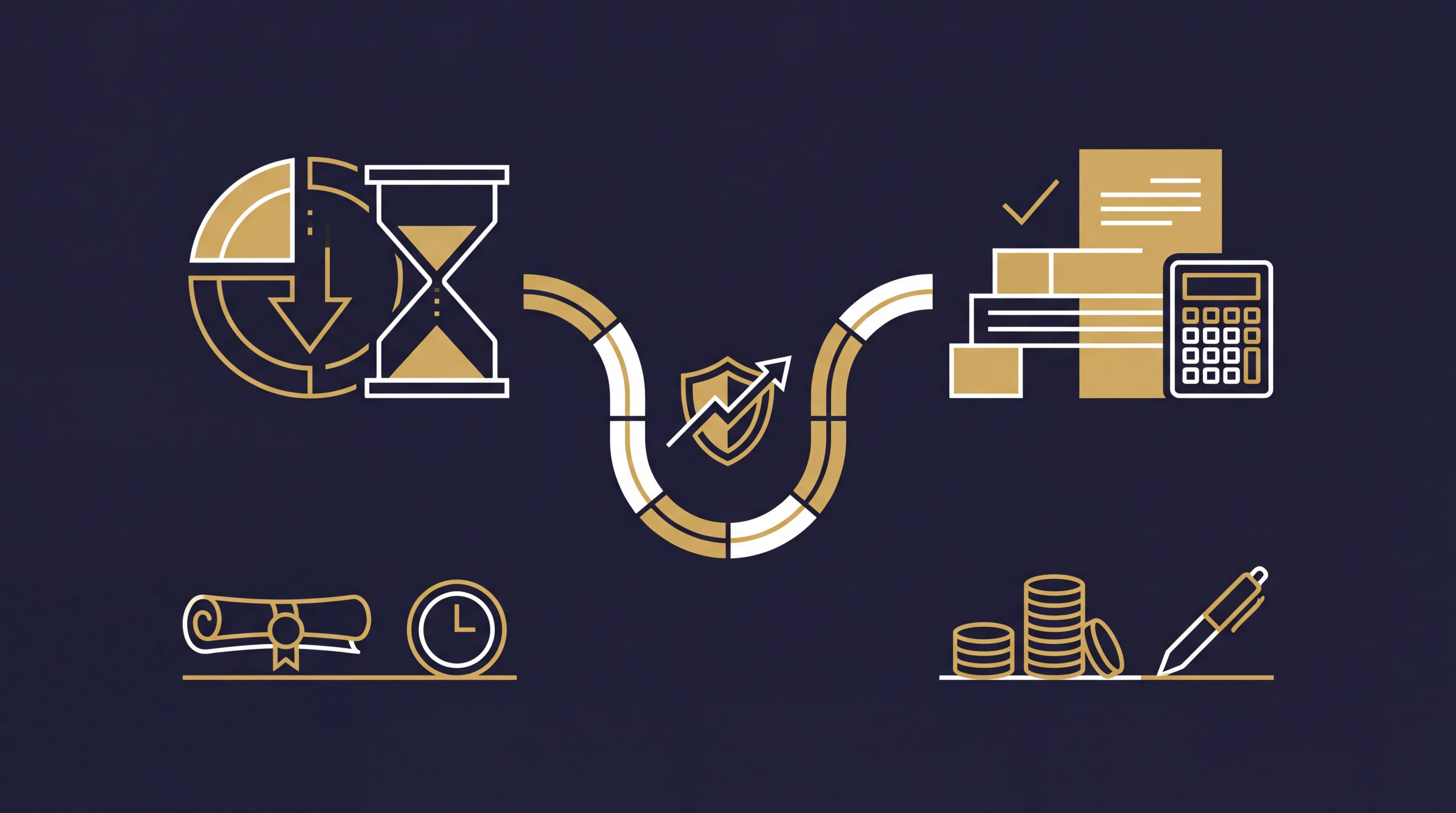
2026 Student Loan Changes: How to Prepare Now
If you have federal student loans, or if you plan to borrow for school in the near future, you need to circle July 1, 2026, on your calendar.
On that date, the federal student loan system will undergo its biggest transformation in decades. To answer what changes for student loans on July 1, 2026: the government is imposing strict new borrowing caps, eliminating the Graduate PLUS loan program, and replacing existing repayment plans with a simplified two-plan structure. The changes come from the One Big Beautiful Bill Act — a sweeping legislative overhaul of higher education financing — which was signed into law in July 2025. The new rules completely rewrite how much you can borrow, how you repay your debt, and how long it takes to get your loans forgiven.
Here is the thing. The government made these changes because the current math simply is not working. According to the Federal Reserve (2025), Americans owed a staggering $1.84 trillion in combined federal and private student loan debt as of the fourth quarter. Even worse, according to that same Federal Reserve data (2025), 9.57 percent of student loans were 90 or more days delinquent during that same quarter.
The psychological toll is just as heavy. According to Gallup (2025), 71 percent of college students or former students report delaying at least one major life event. This includes milestones like buying a home or starting a family because of their student debt.
The new law tries to fix this by putting strict caps on borrowing and simplifying repayment. But transitions are always messy. Depending on your situation, these changes might save you from a lifetime of debt, or they might completely derail your current financial plan.
Here is exactly what is changing on July 1, 2026, and the steps you should take right now to protect yourself.
The End of Unlimited Grad School Borrowing in 2026
Starting July 1, 2026, the federal government is eliminating the Graduate PLUS Loan program and imposing strict new borrowing caps on graduate students. The most dramatic change affects graduate and professional students.
Historically, the Graduate PLUS Loan — a federal student loan that previously allowed graduate students to borrow up to the full cost of attendance — had no aggregate limit. This meant a student could easily rack up hundreds of thousands of dollars in debt for a master's degree.
Under the new system, the government is cutting up the blank check. Direct Unsubsidized Loans — federal loans that accrue interest while you are in school and are not based on financial need — will become the main federal option, and they come with strict new limits. If you are pursuing a general graduate degree, you will be capped at borrowing $20,500 per year, with a lifetime graduate limit of $100,000.
If you are a professional degree student in a designated health or law program (like medical, dental, or veterinary school), your limits are slightly higher. You can borrow up to $50,000 annually, with a $200,000 aggregate limit for your professional studies. Across your entire educational life, including your undergraduate years, all federal student loans are now subject to a hard lifetime limit of $257,500.
This is a massive shift. According to the Brookings Institution (2025), an estimated 25 to 40 percent of graduate borrowers will be affected by these new caps. Say you plan to attend a two-year master's program costing $50,000 a year. The new $20,500 annual limit leaves you with a $29,500 gap to fill each year. You will need to cover that difference through savings, employer sponsorships, scholarships, or private loans.
The bottom line: Graduate students can no longer borrow up to the full cost of attendance and must now navigate strict annual and lifetime federal loan limits.
A Totally New Repayment Menu for Federal Borrowers
For any new loans taken out on or after July 1, 2026, the government is replacing all existing income-driven repayment plans with a simplified two-plan structure. For years, borrowers have had to navigate a confusing alphabet soup of income-driven repayment plans, like IBR, PAYE, ICR, and SAVE.
That complexity is gone. You will only be able to choose between a revised Standard Repayment Plan and the newly created Repayment Assistance Plan (RAP) — a new income-driven repayment framework that calculates monthly payments based on income and family size.
How the Repayment Assistance Plan (RAP) Works
The RAP framework includes two incredibly helpful borrower protections. First, the government will subsidize any remaining unpaid interest if your monthly payment is not high enough to cover it. This means your loan balance will never grow larger than what you originally borrowed.
Second, if your calculated payment covers less than $50 of your principal balance in a given month, the government will pay up to $50 toward your principal for you. This guarantees you are always making forward progress.
If you have felt stuck watching your balances grow despite making payments, this new setup is a breath of fresh air. Learning how to pay off debt when you're starting from zero is much easier when the math is actually working in your favor.
There is a significant catch, though. While older income-driven plans offered loan forgiveness after 20 or 25 years, the new RAP plan extends the forgiveness timeline to a full 30 years (360 qualifying payments). You get better monthly protections, but you will be in the repayment system for a much longer time.
Here's what this means: You get much better monthly interest protections to keep your balance from growing, but you will be stuck in the repayment system for 30 years before seeing any forgiveness.
The Parent PLUS Loan Squeeze and New Borrowing Limits
Beginning July 1, 2026, new Parent PLUS borrowers will face strict annual and lifetime borrowing limits for the first time. Parents who borrow to help their children through college are facing their own set of strict new limits.
Previously, the Parent PLUS program — federal loans that allow parents of dependent undergraduate students to borrow money to pay for their child's education — allowed parents to borrow up to the full cost of attendance with no annual or aggregate limits. Beginning July 1, 2026, new Parent PLUS borrowers will be limited to $20,000 per year per dependent student. There is also a new lifetime maximum of $65,000 per student.
If you have multiple children heading to college, this drastically reduces your federal borrowing power. A family with three children who each have a $40,000 annual tuition bill used to be able to borrow the full amount. Now, they will be capped at $20,000 per child each year.
There is also a massive deadline approaching for existing Parent PLUS borrowers. Parent PLUS loans are not naturally eligible for income-driven repayment. Under the new rules, you can make them eligible by consolidating them into a Direct Consolidation Loan — a federal loan that combines multiple federal student loans into a single loan with one monthly payment — but your consolidation must be fully disbursed by June 30, 2026.
If you miss this deadline and take out a new Parent PLUS loan after July 1, 2026, you face a harsh penalty. All of your Parent PLUS loans will be permanently locked into the Standard Repayment Plan.
Because consolidation applications can take 30 to 90 days to process, financial experts strongly recommend submitting your paperwork by March 2026 at the latest.
The bottom line: Parents can no longer write a blank federal check for their children's college tuition and must consolidate existing loans by June 30, 2026, to access income-driven repayment.
The Public Service Loan Forgiveness (PSLF) Trap
Taking out even a single new federal loan after July 1, 2026, will trigger a contamination rule that subjects your entire existing debt portfolio to the new, stricter repayment rules. Are you a teacher, nurse, government employee, or nonprofit worker pursuing Public Service Loan Forgiveness (PSLF) — a federal program that forgives your remaining loan balance after 120 qualifying payments for public sector workers? If so, you need to be incredibly careful about taking out any new loans after July 1, 2026.
The new law includes a "contamination" provision. Consolidating your existing loans after that date does the same thing. Suddenly, all of your loans become subject to the new repayment restrictions. You will lose access to the older, more generous income-driven repayment plans.
Imagine you are five years into your ten-year PSLF journey. You decide to go back to school part-time and take out a small federal loan in August 2026. Because of that one new loan, your entire existing debt portfolio gets dragged into the new rules. You could lose your current repayment plan and potentially jeopardize the progress you have already made toward forgiveness.
Dealing with student debt is stressful enough without worrying about accidental disqualification. Managing your financial anxiety usually comes down to controlling the variables you can. If you are on the PSLF track, your best move is to avoid taking out any new federal loans after the July 2026 cutoff. Exhaust all other funding options first.
Here's what this means: If you are currently pursuing PSLF, taking out a new federal loan or consolidating after July 2026 could destroy your progress and force you into a longer 30-year repayment timeline.
Changes to Part-Time Student Loan Limits and Forbearance
Effective July 1, 2026, part-time students will face prorated annual borrowing limits, and the government is severely restricting options to pause your loan payments. The new rules tighten the belt on part-time students and borrowers facing financial hardship.
Starting July 1, 2026, if you are enrolled less than full-time, your annual borrowing limit will be prorated based on your enrollment status. If you are attending school at 50 percent capacity, you can only borrow 50 percent of the annual loan limit. This will heavily impact the roughly one-third of graduate students who work full-time and take classes part-time.
The rules around pausing your payments are also getting stricter. Effective July 1, 2027, the government is eliminating the economic hardship and unemployment deferment options. Forbearance — a temporary postponement or reduction of your student loan payments — will also be limited to a maximum of nine months in any two-year period, down from the current standard of 12 months.
Missing payments because you cannot access deferment will damage your credit profile quickly. Understanding what your credit score actually means and how to improve it is crucial, as a defaulted student loan can haunt your financial life for seven years.
The government wants to discourage borrowers from pausing their loans and letting interest accumulate. This means you will need a much stronger personal emergency fund to weather periods of unemployment.
The bottom line: Borrowing as a part-time student will yield less federal funding, and you will need a robust emergency fund because pausing your payments will become much harder.
The Grandfather Clause: How to Keep the Old Student Loan Rules
Students who receive at least one disbursement of an eligible federal loan before July 1, 2026, will be grandfathered in and can continue borrowing under the old rules. If reading about these new limits makes you nervous about finishing your current degree, take a deep breath. The legislation includes legacy provisions designed to protect students who are already in the system.
You might be enrolled in a graduate or professional program on or before June 30, 2026. If you receive at least one disbursement of an eligible federal loan before July 1, 2026, you get to keep borrowing under the old rules. This protection lasts for three academic years or until you complete your program, whichever comes first.
Consider a medical student entering their second year in the fall of 2026. They can still use Grad PLUS loans to cover their full cost of attendance. They just need to have taken out a federal loan for that specific program before the July deadline.
This protection is not automatic, though. You must actually receive a loan disbursement before July 1, 2026, to lock in your legacy status. Are you starting a program in the summer of 2026? It might be worth taking out a small federal loan immediately. This secures your right to borrow under the old, unlimited system for the rest of your degree.
Deadlines for Existing Borrowers
Existing borrowers who are not going back to school also have a deadline to watch. If you only have loans from before July 1, 2026, you retain access to the older income-driven repayment plans until July 1, 2028. By that date, you must officially enroll in an income-driven plan if you want to preserve your access to the 20-year or 25-year forgiveness timelines. If you wait until after July 2028, you will be moved to the new RAP plan and its 30-year timeline.
Here's what this means: Securing a federal loan disbursement before the July 2026 deadline is the only way to lock in the old borrowing limits and repayment plans for your current degree.
Common Questions
What happens to my current student loans in 2026?
Your current student loans will remain under the old rules as long as you do not take out new loans or consolidate after July 1, 2026. Existing borrowers have until July 1, 2028, to officially enroll in an older income-driven repayment plan to preserve their 20- or 25-year forgiveness timelines.
How much can graduate students borrow after July 2026?
Graduate students can borrow up to $20,500 per year in Direct Unsubsidized Loans, with a lifetime limit of $100,000 for general degrees. Professional degree students in designated health or law programs can borrow up to $50,000 annually, capped at a $200,000 lifetime limit.
When is the deadline to consolidate Parent PLUS loans?
The deadline to consolidate Parent PLUS loans to make them eligible for income-driven repayment is June 30, 2026. Financial experts recommend submitting your Direct Consolidation Loan application by March 2026 to ensure it is fully processed in time.
Why is the Graduate PLUS loan program ending?
The Graduate PLUS loan program is ending because the government is implementing strict new borrowing caps to curb the rapidly growing national student debt crisis. By eliminating this program, lawmakers aim to prevent students from borrowing up to the full, uncapped cost of attendance.
Your One Next Step
The student loan system is about to become a tale of two eras. The actions you take over the next few months will permanently dictate which set of rules applies to your money.
Your single next step is to log into your Federal Student Aid account at StudentAid.gov. Write down three things: your current loan types, your current repayment plan, and your progress toward any forgiveness programs.
If you are a parent with Parent PLUS loans, set a calendar reminder to submit your consolidation paperwork by March 2026. If you are on the PSLF track, make a firm commitment not to borrow any new federal funds after June 2026. And if you are planning to start graduate school soon, work with your financial aid office today to ensure your first loan disbursement hits before the July 1 deadline.
The rules of the game are changing. Make sure you are positioned to play them to your advantage.
Your Money. Your Terms.
Listen to this article
AI-generated audio · Voices by ElevenLabs
Get smarter about money
One practical tip per week. No spam, no hype — just clear steps toward financial progress.

Sammy Dynamo
Software Engineer | CS Student | Technopreneur, Dyxium Inc
Related Articles
13 min read
Debt & CreditCan’t Pay Credit Card Minimums? What to Do Now
If you can’t pay credit card minimums, you are not alone. Over 10% of accounts are...
Sammy Dynamo
11 min read
Debt & CreditHELOCs in 2026: Tap Home Equity for Debt or Big Goals?
With average HELOC rates near 7.4% in 2026, tapping home equity to pay off debt or...
Sammy Dynamo
12 min read
Debt & CreditConsolidate Credit Card Debt in 2026: Save Your Score
Learn how to consolidate credit card debt in 2026 without tanking your credit score. Ready to...
Sammy Dynamo