Content Creation Side Hustles: Why Median Earners Make $200
Content Creation Side Hustles: Why Median Earners Make $200
Open any social media app. You'll probably see someone claiming they make thousands of dollars a month posting videos, writing newsletters, or selling digital products. The story is always the same. They started from zero, figured out a simple system, and now make a full-time income working two hours a day.
It's an appealing story. High rent and rising grocery bills are stressing out young professionals, and the idea of typing your way to financial independence is incredibly tempting. But do content creation side hustles actually pay well? The short answer is no: while top creators make millions, the typical person earns very little. According to Bankrate (2025), the median monthly income for a side gig is just $200.
I'm not sharing this low number to discourage you. Extra income is always helpful. But building a realistic personal finance plan requires looking at real numbers, not internet marketing myths. Here is what the data actually says about content creation, gig work, and making extra money online.
How We Measure Extra Income and Gig Work
Financial institutions track extra income using different definitions, but all data points to a massive wealth gap in the creator economy. Let's first look at how financial institutions and researchers track this kind of work, as the data can sometimes feel confusing.
Consumer finance companies usually define a side gig as any extra money earned beyond your main job. This is a very broad net. It includes someone driving for a rideshare app. It also includes a nurse picking up extra weekend shifts or a graphic designer selling digital templates.
Government data is a bit more specific. The Federal Reserve conducts an annual Survey of Household Economics and Decisionmaking (SHED). They track gig activities. Gig activities — short-term tasks, renting out property, or selling items online. According to the Federal Reserve (2024), 20 percent of adults performed gig activities in the prior month.
Industry reports focus strictly on the creator economy. Creator economy — independent workers who earn money by creating and distributing digital content. This includes video, audio, writing, and digital art.
These definitions overlap. Someone selling handmade crafts on Etsy might be counted as a gig worker by the Federal Reserve. Industry reports might call them an online creator. Consumer surveys might label them a side earner.
The bottom line: Whether you call it gig work or content creation, a few people make a lot of money, and most make very little.
The Illusion of Average Side Hustle Earnings
Average income statistics in the creator economy are highly misleading because a tiny percentage of top earners skew the data. If you look at the headline numbers from recent surveys, you might think the typical person makes nearly a thousand dollars a month on the side.
According to Bankrate (2024), Millennials reported average monthly extra earnings of $1,129, while Gen Z reported an average of $958. Overall participation in extra work dropped in 2025. Still, the average monthly income across all age groups remained relatively high at $885.
But averages in the creator economy hide the real story. Imagine nine people make zero dollars and one person makes $10,000. The average income for that group is $1,000. Yet, the typical person in that group made absolutely nothing.
This is why the median number is so important. Median — the exact middle of the pack where half of the people make more, and half make less. According to Bankrate (2024), the median monthly income for extra work was $250. According to Bankrate (2025), that median dropped to just $200.
The 2025 Bankrate survey actually found that the largest income bracket for side earners was between $1 and $50 per month. A full 28 percent of people taking on extra work fell into this bottom tier. A very small group of top earners pulls up that $885 average.
Here's what this means: Averages hide the truth. Most participants make enough to cover a utility bill, not a mortgage.
The Creator Economy Reality Check
When focusing strictly on content creation, the earnings distribution operates on a winner-take-most model. If you narrow the focus strictly to digital content, the earnings distribution becomes even more unequal.
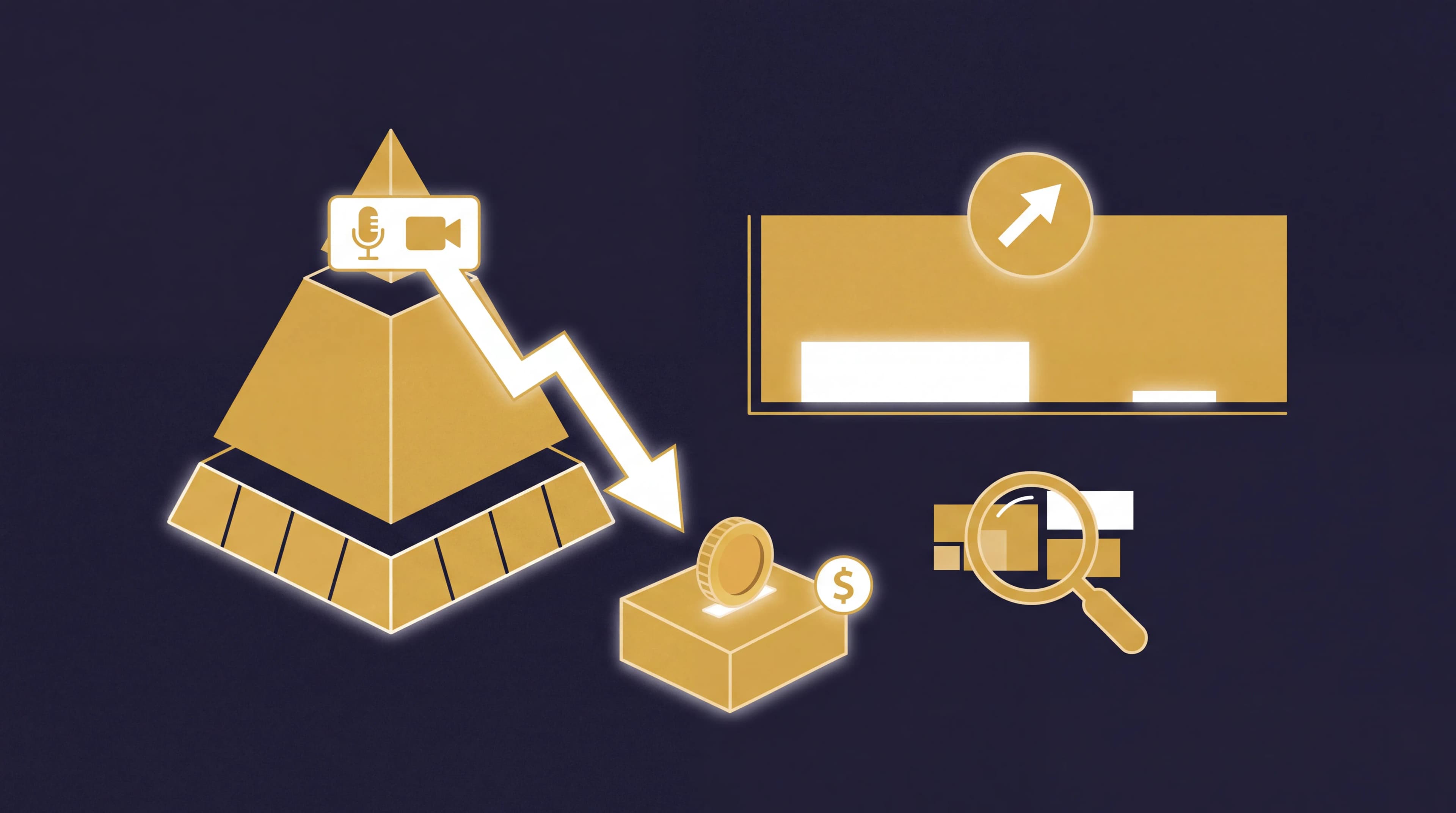
According to Take Creative Control (2023), more than 81 percent of creators earned $1,000 or less from their online work in a single year. To put that in perspective, that is less than $84 a month. At the other end of the spectrum, only 0.4 percent of creators earned more than $100,000.
You can see this same pattern on individual platforms. Patreon — a popular platform where fans pay creators directly for content. According to academic research on Patreon (2022), only about 1 percent of Patreon creators earn at least $30,000 annually. The highest-earning creators receive an average of $15 per pledge, while the lowest earners receive just $2 per pledge.
MBO Partners researches independent work. According to MBO Partners (2024), 71 percent of independent creators earn less than $30,000 a year from their digital content. Many of these individuals treat content creation as a part-time project rather than a primary job. This makes sense given the income levels.
The bottom line: The internet operates on a winner-take-most model, meaning the top 1 percent of creators capture the vast majority of the views, sponsorships, and revenue. Platforms like YouTube, Substack, and Instagram use algorithms that heavily favor established accounts with high engagement, creating a massive compounding effect.
Where Extra Income Actually Goes
Most people use their side hustle income to cover basic living expenses rather than funding luxury purchases or early retirement. Social media often frames extra income as a way to fund early retirement or buy expensive things, but the data tells a much more grounded story. Most people use their extra money just to keep their heads above water.
Inflation pushed the cost of living higher over the last few years. According to Bankrate (2023), 33 percent of people with extra income streams used that money for regular living expenses. This included housing, groceries, and utilities. Only 25 percent used it for savings, and 12 percent used it for debt payoff.
The Federal Reserve’s SHED data reinforces this reality. According to the Federal Reserve (2024), 31 percent of adults performing gig work said they would have trouble making ends meet without those extra activities.
Here's what this means: For young professionals, extra work is a financial safety valve to plug gaps in a monthly budget, not an empire-building exercise. If your rent goes up by $150 a month, finding a way to make an extra $200 online is a highly practical response.
The Hidden Costs of Content Creation
Content creation carries significant hidden costs in both unpaid time and software expenses that drastically lower your true hourly rate. When you earn $200 from a traditional part-time job, you generally know how many hours you traded for that money. Content creation is different. The barrier to entry is low. However, the time commitment required to gain any traction is massive.
Writing a weekly newsletter, filming and editing short videos, or designing digital products requires hours of unpaid upfront work. Let's say you spend ten hours a week on a project that eventually makes $200 a month. Your actual hourly rate is roughly $5.
You also have to consider financial costs. Web hosting, editing software, camera equipment, and email marketing platforms all cost money. It's very easy to spend $50 a month on software subscriptions to run a project that only brings in $30.
Taxes are another major consideration. When you work a traditional job, your employer handles tax withholding. When you earn money online, you are an independent contractor. Self-employment taxes — the taxes independent contractors must pay to cover Social Security and Medicare. You are responsible for tracking your expenses and paying these taxes yourself. If you aren't prepared for this, a modest tax bill can wipe out a big chunk of your earnings, which is why understanding gig economy taxes and what you owe is crucial.
The bottom line: Once you account for unpaid hours, software subscriptions, and self-employment taxes, your actual hourly rate for a digital side hustle might be as low as $5.
Setting Realistic Expectations for Your Side Gig
Approaching a digital side hustle with realistic expectations is the key to avoiding burnout and actually improving your financial stability. None of this data means you should avoid starting a digital project. Earning an extra $200 a month is still $2,400 a year. You can invest that money consistently or use it to pay off a high-interest credit card. You could also put it toward an emergency fund. Any of these choices can meaningfully improve your financial stability.
Treat it as an experiment in entrepreneurship rather than a guaranteed paycheck. Building an audience takes time. If you expect to replace your full-time salary in six months, you will likely end up frustrated and burned out. If you expect to learn new skills and maybe cover your car insurance, you'll be in a much better mental space.
Keep your startup costs as low as possible. You don't need a professional studio to start making videos. You also don't need expensive software to start writing. Prove that you enjoy the work and can do it consistently before you spend money on it. If you want low-risk ideas, explore how to start a side business for under $500.
Focus on Skill Building Over Immediate Revenue
Think about the longevity of the work you choose. The digital world is shifting rapidly with the introduction of generative AI tools. Some types of content are becoming highly commoditized. This makes it even harder to stand out. It's worth thinking critically about where you invest your time by focusing on AI-resistant side hustles that won't be automated.
Focus on the skills you are building. A newsletter that only makes $50 a month might still be the exact portfolio piece you need to negotiate a $10,000 raise at your primary job.
Here's what this means: The most valuable part of a creative side project often isn't the direct revenue, but the portfolio, software knowledge, and network you build along the way.
Common Questions
How much does the average content creator make?
The average content creator makes around $885 per month, but this number is highly skewed by top earners. The median income for a content creation side hustle is actually just $200 a month. Most beginners earn between $1 and $50 monthly.
Why do most side hustles fail to make a full-time income?
Most side hustles fail to replace a full-time income because the internet operates on a winner-take-most model. Platforms favor established accounts, meaning the top 1 percent of creators capture the vast majority of revenue. Additionally, hidden costs and unpaid hours make it difficult to scale profitably.
What are the hidden costs of a content creation side hustle?
The hidden costs of a content creation side hustle include web hosting, editing software, camera equipment, and self-employment taxes. Beyond financial expenses, creators must also invest massive amounts of unpaid time into filming, writing, and editing before seeing any return.
Is starting a side gig still worth it?
Yes, starting a side gig is still worth it if you have realistic expectations and keep your startup costs low. Even an extra $200 a month can meaningfully improve your financial stability when used to pay off debt or build an emergency fund.
Your One Next Step
If you are currently working on a side project or thinking about starting one, take 15 minutes this weekend to run the real numbers. Track exactly how many hours you expect to spend on it per week. Then subtract any monthly costs (like software or platform fees) from your expected revenue. Calculate your true hourly rate. This gives you the clarity you need to decide if the project is actually worth your time. You might find you are better off focusing your energy elsewhere.
Your Money. Your Terms.
Listen to this article
AI-generated audio · Voices by ElevenLabs
Get the 2026 Wealth Starter Kit
Free spreadsheet budget models, 2026 tax deduction checklists, and weekly practical playbooks. No spam, no affiliate shills.

Sammy Dynamo
Software Engineer | CS Student | Technopreneur, Dyxium Inc
Related Articles
13 min read
EntrepreneurshipMicro-Tasking Apps in 2026: Is Gemsloot Worth Your Time?
Are micro-tasking apps like Gemsloot worth your time in 2026? With median side income at just...
Sammy Dynamo
12 min read
EntrepreneurshipUGC Side Hustles in 2026: Monetize Without a Following
Brands pay regular people to make content. With average earnings around $885 a month, here is...
Sammy Dynamo
11 min read
EntrepreneurshipReddit Side Hustle Promotion: Post Without Getting Banned
Want to master Reddit side hustle promotion? Learn how to share your gig, navigate strict community...
Sammy Dynamo