Side Hustles That Won’t Be Automated by AI (And Which Ones Are Dying in 2026)
Side Hustles That Won't Be Automated by AI (And Which Ones Are Dying in 2026)
We need to talk about the elephant in the room. Artificial intelligence has fundamentally changed what it means to earn extra money on the side.
If you have spent any time looking for a secondary income recently, you have probably noticed a shift. The easy, repetitive online jobs that used to pay a few hundred dollars a month are disappearing. Companies are handing those tasks over to software.
Yet, despite this massive technological shift, the side gig economy is doing just fine. As of early 2026, roughly 39% of working Americans maintain some form of side income. That is about 80 million people generating an estimated $1.27 trillion in economic value every year.
People are still making money. They are just making it differently.
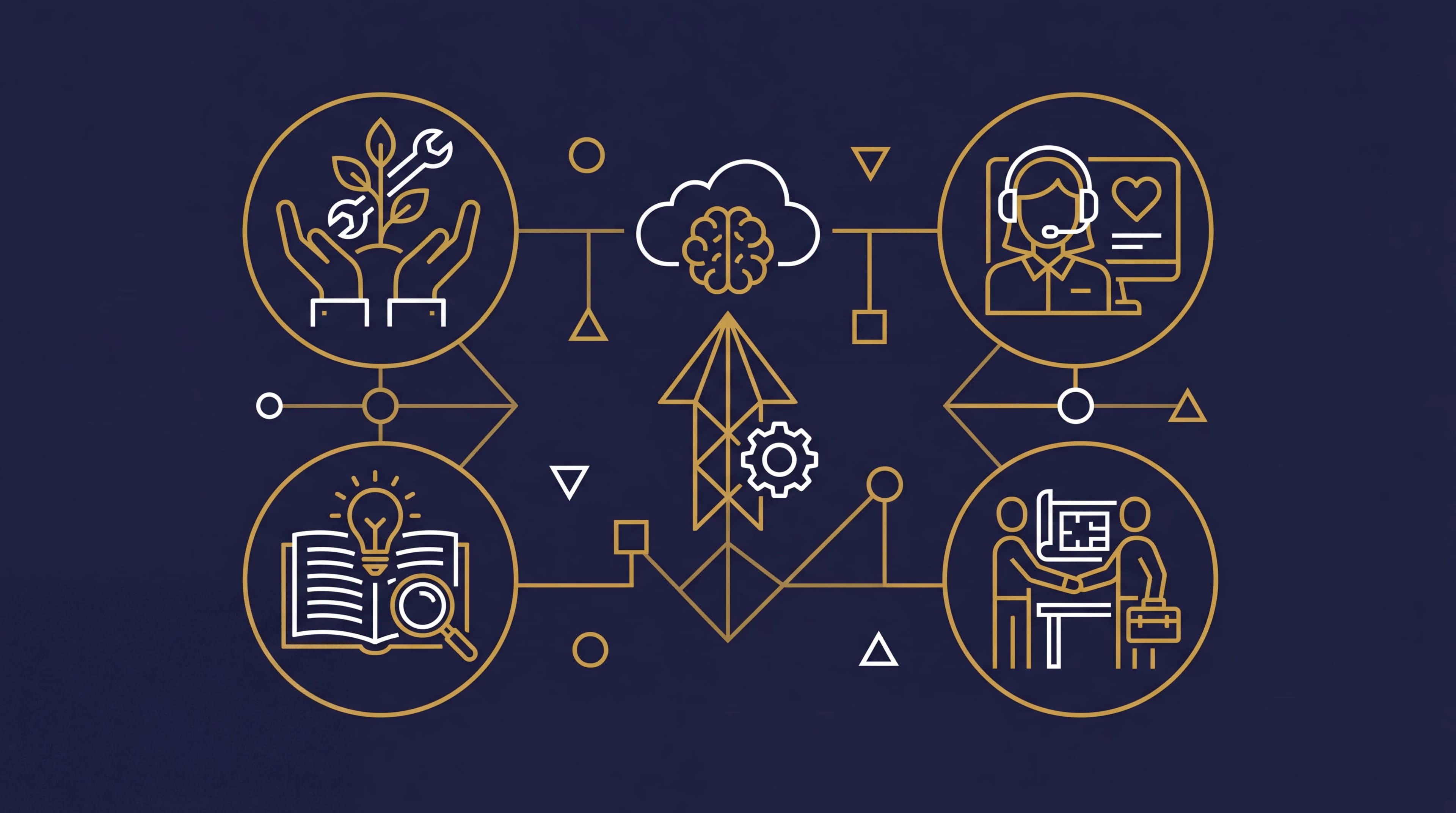
The market has split into two distinct paths. Work that relies on routine information processing is facing intense pressure from automation. Meanwhile, work that requires uniquely human traits (like emotional intelligence, physical presence, and complex judgment) is seeing higher demand than ever.
If you want to build an extra income stream this year, you need to know exactly where the safe zones are. Let us look at the numbers, the dying trends, and the side businesses that AI simply cannot touch.
The Real State of Extra Income in 2026
Before we look at specific jobs, we need to set some realistic expectations about money.
The internet is full of wild claims about passive income. The actual data tells a much calmer, more realistic story. According to recent demographic research, the average side gig generates between $885 and $1,122 per month.
However, averages can be misleading because a small group of high earners pulls the number up. The median side income sits at just $200 per month. A 2025 Bankrate survey actually found that median earnings dropped slightly from the previous year. This drop suggests that basic, low-barrier gigs are getting saturated or automated.
In fact, nearly 59% of people with a side business earn less than $250 a month. Only about 10.5% make more than $1,000 monthly.
This is not meant to discourage you. An extra $200 or $500 a month is incredibly valuable. It can help you pay down debt, cover rising grocery bills, or give you the cash to start investing $50 a month.
The people who do cross that $1,000 or $5,000 monthly threshold usually operate in specialized online businesses, professional consulting, or local services. They also treat their extra work like a real business. If you want to reach those higher tiers, you have to pick a path that software cannot easily replicate.
The Side Gigs Fading Fast
A good financial strategy involves knowing what to avoid. Several formerly popular side jobs are showing clear signs of decline in 2026. If you are thinking about starting one of these, you might want to pivot.
Basic Freelance Writing and Data Entry
Basic freelance writing is under heavy siege. Platforms like Upwork and Fiverr used to be goldmines for people writing generic blog posts or simple product descriptions. Today, those platforms are flooded with AI-generated content competing at rock-bottom prices. Companies realize they can use tools like ChatGPT or Claude to generate standard marketing copy in seconds.
Data entry is facing a similar fate. It used to be the ultimate work-from-home starter job. Now, optical character recognition and intelligent document processing handle routine data input faster and with fewer errors than humans. Industry advisories specifically recommend avoiding data entry entirely in 2026.
Simple Graphic Design
Entry-level graphic design is also shrinking. Tools like Canva Magic Design and Adobe Firefly allow anyone to generate logos and social media graphics from a simple text prompt. While high-level creative direction is still safe, the basic production work that used to launch design careers is largely automated.
Print-on-Demand and Generic Resumes
Print-on-demand businesses (selling generic designs on t-shirts or mugs) are suffering from extreme market saturation. Uploading a basic design and waiting for sales no longer works without a massive marketing budget.
Resume writing is another casualty. You used to be able to charge $50 to $150 to format a resume. Now, AI tools can generate a perfectly formatted, ATS-friendly resume in 30 seconds. To make money in career services today, you have to offer high-level interview coaching or strategic networking advice.
The Most AI-Resistant Side Gigs Right Now
So, what actually works? The jobs with the lowest automation risk share a few core traits. They require emotional connection, physical presence, complex judgment, or real-time adaptation.
Healthcare and Wellness Support
Healthcare-adjacent roles show incredibly low automation risk. Medical and emotional situations are unpredictable. They require human trust.
Mental health counseling and wellness coaching have emerged as highly resilient side businesses. While you need specific credentials to be a licensed therapist, related fields like art therapy, music therapy, and general life coaching are growing rapidly. People pay for accountability, empathetic listening, and human connection. An AI chatbot can give you advice, but it cannot hold you accountable the way a real human coach can.
Personal training and athletic coaching fall into this same category. Athletic trainers have a projected growth rate of 17.5% through 2032. You cannot automate a personal trainer checking your form in real-time and pushing you to finish your last set. Many part-time trainers comfortably charge $50 to $100 per session.
In-Person and Presence-Required Services
Some jobs derive their entire value from physical presence. These are completely immune to digital automation.
Housecleaning, pet sitting, personal styling, and local handyman services will always require a human. The Federal Reserve's recent Economic Well-Being survey noted that 20% of adults participate in local, task-based gig activities.
Another growing area is community support and elder companionship. As the population ages, families are looking for reliable people to help older relatives with errands, transportation, or simply providing conversation. A human companion offers emotional warmth that no screen can replace.
Specialized Creative Work
While generic writing and design are dying, specialized creative work is thriving. Audiences are actually seeking out authentic, human-created art as a reaction against a flood of AI content.
Choreographers, for example, have a massive projected growth rate of 29.7% through 2032. Dance is deeply tied to the human physical experience.
The same goes for handmade goods. Calligraphy, custom woodworking, and hand-thrown pottery are doing well on platforms like Etsy. Buyers specifically want these items because a human made them. They are paying for the imperfections and the story behind the craft.
Why "Digital" Doesn't Mean "Doomed"
There is a common misconception that anything done on a computer will eventually be automated. This is not true. You do not have to abandon the internet and become a carpenter to survive the AI wave.
Digital work is perfectly safe if it requires complex judgment and specialized knowledge.
Take consulting, for example. If you help small businesses navigate specific tax regulations or set up complex software systems, you are using high-level problem-solving. A business owner might use AI to draft an email, but they want a human expert to tell them if their business strategy actually makes sense. Specialized consultants regularly charge premium rates of $100 to $300 an hour because their judgment is irreplaceable.
The same applies to specialized virtual assistants. A general virtual assistant who just answers emails might lose clients to AI scheduling tools. But a specialized assistant who understands the nuances of the real estate industry, manages client relationships, and makes judgment calls on behalf of the business owner is incredibly valuable.
You can absolutely start a side business for under $500 using just your laptop. You just have to sell your judgment and expertise, not your ability to type fast.
Expert Frameworks for Future-Proofing Your Income
Economists and researchers have spent a lot of time studying how humans and AI will work together. Their findings offer a great roadmap for anyone trying to build a resilient secondary income.
The Human Skills Framework
Research from Workday identifies several human capabilities that remain highly resistant to automation. These include ethical judgment, emotional intelligence, collaboration, and complex communication.
If you want to future-proof your extra income, audit your services against this list. If you are a freelance writer, transition from writing generic blog posts to writing executive speeches or conducting deep-dive interviews. Interviews require emotional intelligence and real-time collaboration. AI cannot interview a human subject effectively because it cannot read the subtle emotional cues that lead to great follow-up questions.
The Skill Partnership Model
McKinsey research suggests that the future of work is not about humans versus AI. It is about humans partnering with AI. They estimate that effective human-AI collaboration could generate $2.9 trillion in economic value by 2030.
The most successful side earners in 2026 are using AI as a tool to speed up their boring tasks. A consultant might use an AI tool to summarize a 50-page industry report, but they use their human brain to decide how that information impacts their client.
Do not try to compete with AI on speed or volume. Use AI to handle the volume, and use your human brain to provide the quality control and the relationship management.
Escape Platform Dependency
One of the biggest risks to your side income today is relying entirely on platforms like Upwork, Fiverr, or even social media algorithms. These platforms can change their rules, increase their fees, or flood your category with AI-generated competitors overnight.
The most secure side businesses build direct relationships with their clients. Use platforms to get your first few customers, but move them to direct contracts as soon as possible. Build your own email list. Ask for referrals. When you have a direct relationship built on trust, a client is highly unlikely to replace you with a cheaper automated tool.
(And a quick practical note: when you do start making money directly from clients, keep your records organized. You will need to understand your gig economy taxes so you do not get a surprise bill in April.)
Your One Next Step
Look at the side income you currently have, or the one you are planning to start, and ask yourself one question: "What part of this requires my specific human presence, empathy, or judgment?"
If the answer is "none of it," it is time to pivot. Find a way to specialize your knowledge. Add a consulting call to your service package. Move from digital products to hands-on coaching. Shift your focus to a local, in-person service.
You do not need to outsmart the algorithms. You just need to lean into the things that make you human. People will always pay for trust, expertise, and genuine connection.
Your Money. Your Terms.
Listen to this article
Get smarter about money
One practical tip per week. No spam, no hype — just clear steps toward financial progress.

Sammy Dynamo
Software Engineer | CS Student | Technopreneur, Dyxium Inc
Related Articles
11 min read
EntrepreneurshipAI Side Hustles: What Data Labeling Actually Pays in 2026
Curious what AI side hustles actually pay? While prompt engineering pays well, most data labeling earns...
Sammy Dynamo
10 min read
EntrepreneurshipContent Creation Side Hustles: Why Median Earners Make $200
Most content creation side hustles pay just $200 a month. Discover what the data actually says...
Sammy Dynamo
11 min read
EntrepreneurshipPassive Income in 2026: What Works for Beginners
Only 20% of U.S. households earn passive income in 2026. Discover what actually works for beginners,...
Sammy Dynamo