Financial Doomscrolling: Protect Your Mind & Wallet
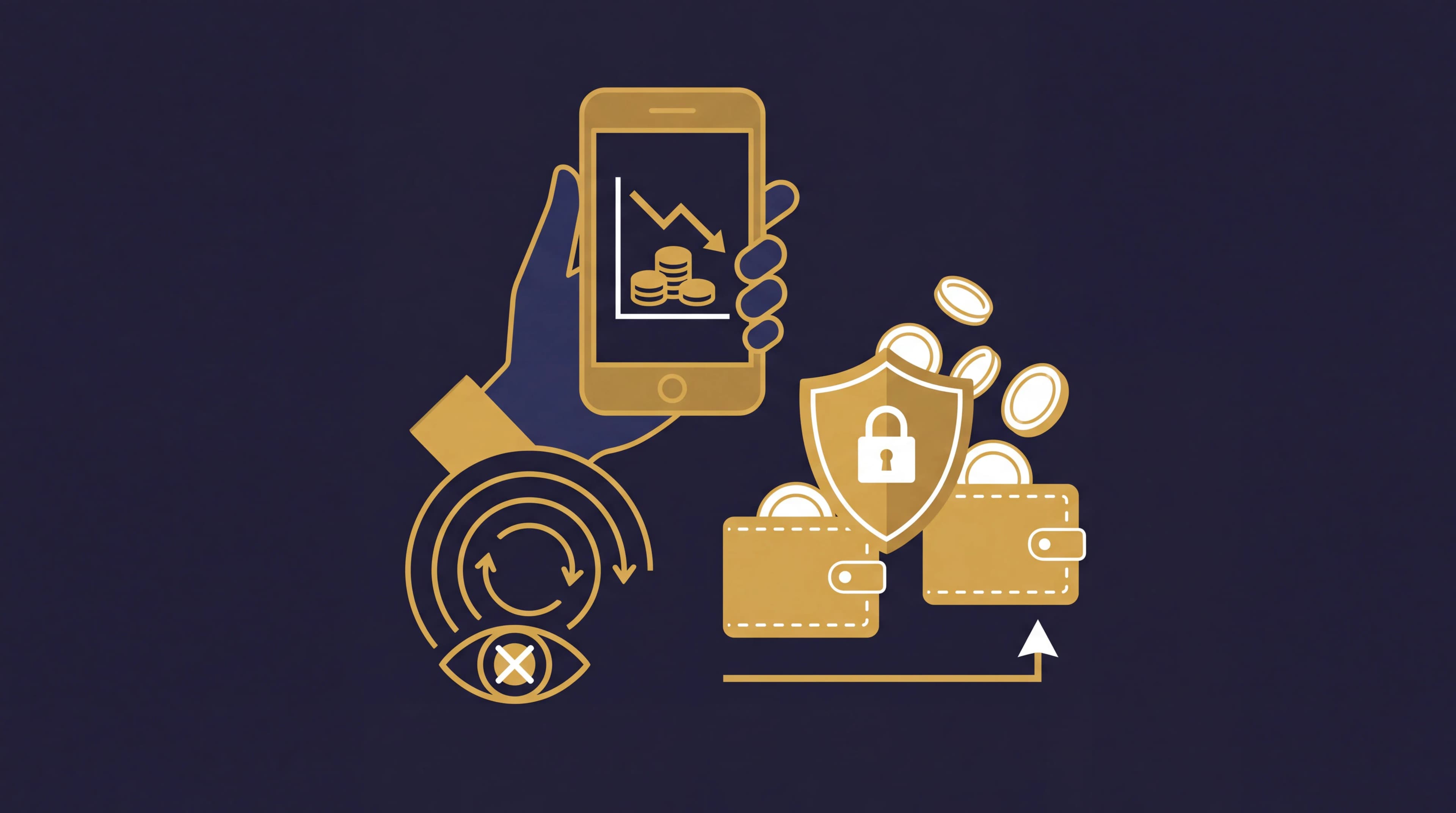
Financial Doomscrolling: Protect Your Mind and Wallet
You open your banking app. The checking balance is a little lower than you hoped. You close the app. Ten minutes later, you open a social media feed and immediately see a video about how inflation is destroying your generation's future. You read the comments. Then, just to be safe, you open your credit card app to check your pending charges.
Sound familiar?
You are not alone. Financial doomscrolling is the compulsive habit of obsessively consuming negative money-related news and constantly checking financial apps to soothe money stress. It is a modern habit where the anxiety of personal finance collides with the addictive design of our smartphones. We constantly check balances, read alarming economic headlines, and watch money-related content long after it stops being helpful.
Understanding why we do this is the first step to stopping it. Protecting your attention is just as important as protecting your money. Your Money. Your Terms. Let us look at what the data says about financial doomscrolling and how you can reclaim your peace of mind.
What Is Financial Doomscrolling?
Financial doomscrolling is a digital anxiety loop triggered by money stress. The term doomscrolling originally described the habit of obsessively reading negative news during a crisis. In personal finance, it looks a bit different.
Financial doomscrolling — the repetitive, often compulsive consumption of negative money-related information and constant checking of financial accounts.
It takes many forms. It might be checking your bank balance three times a day. It could be refreshing your investment portfolio when the stock market is down. It often involves falling down a rabbit hole of social media commentary about the economy, housing prices, or how other people are spending their money.
Digital banking has made real-time balance information available on demand. Push notifications alert us to every transaction, low balance, and credit card charge. This creates a feedback loop. You feel anxious, so you check your phone for an update. The update reminds you of your financial obligations, which makes you more anxious. So, you keep scrolling.
The bottom line: Digital banking and push notifications have transformed normal financial awareness into an addictive, anxiety-producing feedback loop.
The Heavy Toll of Money Stress
Money stress is the leading cause of mental health strain for modern adults. We doomscroll because we are stressed, and the numbers paint a very clear picture of just how widespread this anxiety is right now.
According to NerdWallet (2024), 84 percent of Americans experience financial stress. The biggest drivers are not complicated investment worries. They are everyday survival costs. The cost of food causes stress for 50 percent of respondents, while housing costs weigh on 40 percent. Lack of savings is another major trigger, cited by 36 percent of people.
According to Bankrate (2025), 43 percent of U.S. adults say money negatively affects their mental health at least occasionally. It causes anxiety, worrisome thoughts, and loss of sleep. Money is actually the single most common factor affecting mental health, ranking higher than politics, world news, or even personal health.
Of those who say money harms their mental health, 69 percent point directly to inflation and rising prices. Another 61 percent cite difficulty paying everyday expenses like groceries or utilities, and 57 percent worry about not having enough emergency savings.
When your baseline state is stress about buying groceries or paying rent, your brain goes on high alert. You start looking for threats and solutions everywhere. If this sounds like your daily experience, you might want to read more about how to manage your financial anxiety effectively.
Here's what this means: When basic survival costs become primary stress triggers, your brain stays on high alert, making you highly susceptible to the doomscrolling cycle.
Why Your Brain Wants to Keep Scrolling
Financial scarcity hijacks your cognitive bandwidth and forces your brain to seek short-term control. If checking our bank accounts and reading economic news makes us feel worse, why do we keep doing it?
Behavioral economists Sendhil Mullainathan and Eldar Shafir offer a brilliant explanation in their research on scarcity. They found that when a resource is scarce (like money or time), it captures your mind. It reduces your cognitive bandwidth, which is the mental capacity you have available for problem-solving and self-control.
When money is tight, everyday expenses shift from being boring background tasks to urgent problems that constantly interrupt your thoughts. Your brain wants to regain a sense of control. Checking your accounts repeatedly feels like you are doing something productive. Each time you check, you get a tiny bit of new information. A transaction posts, or a bill clears. This temporarily reduces your uncertainty.
However, this constant monitoring drains your precious mental energy. Instead of sitting down to make a long-term plan, you end up juggling short-term crises. You spend all your energy watching the numbers move, leaving you too exhausted to actually change them.
The bottom line: Checking your accounts repeatedly offers a false sense of control, draining the mental energy you actually need to make long-term financial plans.
Intimidation and the Social Media Trap
Social media algorithms exploit financial intimidation by promoting anxiety-inducing content over sound financial education. Young professionals and beginners are especially vulnerable to financial doomscrolling. You are dealing with rising rents and starting salaries while trying to figure out how the financial system actually works.
Finance can be incredibly intimidating. The same NerdWallet report found that while 41 percent of Americans feel good about their financial knowledge, 79 percent find at least one financial topic intimidating. Using a credit card without going into debt intimidates 37 percent of people. Filing taxes scares 36 percent. Investing and cryptocurrency intimidate 30 percent and 32 percent, respectively.
When we feel intimidated by a topic, we usually do not read a textbook. We go to social media.
According to Statista (2024), adults aged 18 to 24 in the United States spend about 186 minutes per day on social media. According to Soax (2024), over 25 percent of users are on these platforms specifically to read news stories or see what people are talking about.
The Danger of Financial Influencers
This is where the danger lies. According to the FINRA Investor Education Foundation (2024), 60 percent of investors aged 18 to 34 use social media for investing information. Even more concerning, 61 percent of this group have made at least one investment decision based on a recommendation from a social media personality.
These young investors exhibit a massive knowledge gap. On objective investment quizzes, they scored only about 42 percent correct. Yet, 63 percent of them rated their own financial knowledge as high.
Social media algorithms prioritize engagement. They push content that makes you feel outraged, anxious, or envious. When you combine high financial stress, low objective knowledge, and algorithmically curated panic, financial doomscrolling flourishes. You end up making decisions based on emotionally charged videos rather than careful planning.
Here's what this means: Combining high financial stress with algorithmically curated panic leads young investors to make emotionally charged decisions instead of careful, long-term plans.
Credit Card Anxiety and the Dispute Cycle
Credit cards are a primary trigger for financial doomscrolling because they represent future debt obligations. They represent money we have already spent and a bill we have to pay in the future.
According to Debt.com (2024), about four in ten Americans now feel stressed simply when using their credit cards. For Gen Z, it is even worse, with 47 percent reporting stress when swiping.
The anxiety peaks when the bill arrives. More than half of respondents (51 percent) report feeling stressed when reviewing their credit card bills. This stress brings on feelings of hopelessness, loss of sleep, and lower self-esteem. In a separate report on financial regret, 78 percent of Americans said they have at least one financial regret, with overspending on credit cards topping the entire list.
The Hyper-Vigilance of Credit Card Disputes
This anxiety leads to hyper-vigilance. We stare at our transactions, terrified of making a mistake. According to the Consumer Financial Protection Bureau (2024), consumers submitted nearly five million complaints between January 2020 and September 2024. When you exclude credit reporting issues, credit cards are a massive source of frustration.
Interestingly, complaints about late fees are quite low, making up only about 2.5 percent of credit card complaints. The vast majority of card complaints (about 22.46 percent) are disputes over purchases shown on statements. We are constantly monitoring our digital statements, looking for errors, fraud, or unexpected charges because we feel we have zero margin for error.
The bottom line: The constant fear of making a financial mistake drives us to hyper-monitor our digital statements, creating a cycle of endless credit card anxiety.
The Illusion of Falling Behind
Economic pessimism and social media comparison create a toxic illusion that you are permanently falling behind. Part of what drives doomscrolling is the feeling that the economy is working against you.
According to Gallup (2026), 31 percent of Americans cite inflation and high prices as the top financial problem facing their families.
More importantly, a record 55 percent of Americans say their financial situation is getting worse. This is the fifth consecutive year where more people feel they are falling behind rather than getting ahead.
When you feel like you are falling behind, seeing curated images of other people's success on social media is devastating. You watch a video of someone your age buying a house, and then you check your own savings account. The comparison makes you feel inadequate, which drives more anxiety, which drives more scrolling. It is a toxic cycle.
Here's what this means: Comparing your behind-the-scenes financial reality to someone else's curated social media highlight reel will only accelerate your doomscrolling habit.
How to Break the Doomscrolling Cycle
Breaking the financial doomscrolling cycle requires intentional boundaries between your attention and your money apps. You cannot control inflation, and you cannot control the housing market. But you can control your attention.
Here are practical steps to protect your mind and your wallet.
1. Automate the Basics
The less you have to manually move money around, the less you will check your accounts. Set up automatic transfers for your savings and investments. Schedule your utility bills and credit card minimums to pay automatically. When you know your basic obligations are handled by a system, your brain can finally relax. If you want a step-by-step guide, learn how to automate your finances in one afternoon.
2. Set Strict Checking Hours
Treat your personal finances like a job. You do not need to check your bank balance at 11:00 PM on a Tuesday. Pick one day a week (for example, Sunday morning) to log in, review your transactions, pay any manual bills, and check your balances. If you feel the urge to check your app on a Wednesday, remind yourself that Sunday is your scheduled time.
3. Turn Off Non-Essential Notifications
Push notifications are designed to steal your attention. You need to know if there is a fraudulent charge on your card, but you do not need a push notification every time a five-dollar coffee clears your account. Go into your banking and credit card apps and disable daily balance alerts and routine transaction notifications. Keep only the alerts for security issues or low-balance warnings.
4. Curate Your Social Media Feed
Your social media feed should not make you feel poor or panicked. Unfollow accounts that constantly post apocalyptic economic predictions. Unfollow influencers who make you feel bad about your current lifestyle. Replace them with calm, educational creators who focus on practical steps rather than hype. If an account relies on making you anxious to get views, block it.
5. Audit Your Recurring Costs
A lot of digital monitoring comes from a fear of surprise charges. We check our accounts because we cannot remember when our streaming services or gym memberships are going to hit. Take the time to map out your recurring expenses. If you are tired of unexpected hits to your checking account, you can use our guide to audit your subscriptions and cure subscription fatigue. Knowing exactly what is coming out of your account removes the need to constantly check it.
The bottom line: By automating your finances and restricting your checking habits, you can protect your mental bandwidth and make better financial decisions.
Common Questions
What is financial doomscrolling?
Financial doomscrolling is the repetitive, often compulsive consumption of negative money-related information and constant checking of financial accounts. This habit is usually triggered by money stress and a desire to regain a sense of control over your finances. Ultimately, it drains your mental energy without improving your financial situation.
Why do I constantly check my bank account?
You constantly check your bank account because financial scarcity reduces your cognitive bandwidth and makes your brain seek short-term reassurance. Each time you check your balance, you get a temporary sense of control over your financial anxiety. However, this hyper-vigilance quickly turns into a draining cycle that prevents long-term financial planning.
How can I stop stressing over money news?
You can stop stressing over money news by curating your social media feeds and setting strict boundaries for when you consume financial content. Unfollow accounts that rely on apocalyptic economic predictions or make you feel inadequate about your lifestyle. Instead, focus on automating your finances and limiting your account-checking to one scheduled day per week.
Your One Next Step
Pick up your phone right now, open your primary banking app, and navigate to the settings menu. Find the notifications section and turn off all alerts except for fraud warnings and overdraft alerts. Reclaiming your attention starts by stopping the constant stream of financial interruptions. Your mental bandwidth is your most valuable asset. Protect it.
Listen to this article
AI-generated audio · Voices by ElevenLabs
Get smarter about money
One practical tip per week. No spam, no hype — just clear steps toward financial progress.

Sammy Dynamo
Software Engineer | CS Student | Technopreneur, Dyxium Inc
Related Articles
10 min read
Mindful Spending2026 Car Tax Deduction: A Math Reality Check
Thinking of buying a car for the 2026 tax deduction? With average ownership costs hitting $12,297...
Sammy Dynamo
11 min read
Mindful SpendingCost of Raising a Child in 2026: A Financial Guide
The cost of raising a child in 2026 exceeds $303,000. Discover where the money goes and...
Sammy Dynamo
13 min read
Mindful SpendingSaying No to Expensive Weddings: Money Boundaries
Struggling with the cost of being a guest? Learn how saying no to expensive weddings and...
Sammy Dynamo