AI Bubble or Real Opportunity? How to Invest in Tech

AI Bubble or Real Opportunity? How to Invest in Tech Safely
Artificial intelligence headlines are everywhere. One day, a major tech company announces record-breaking profits. The next day, a different tech giant loses billions in market value over a single disappointing earnings report.
Is AI a bubble or a real opportunity? The short answer: AI is a real economic opportunity driven by actual corporate profits and job growth, but the stock market's heavy concentration makes it highly volatile. To invest safely, you should use diversified index funds rather than betting your whole future on single stocks.
This constant whiplash is stressful when you just want to build your savings. You don't want to miss a massive technological shift. But betting your money on a few tech stocks feels a lot like gambling. The good news? You don't have to choose between going all-in and sitting out. Data shows AI is a real economic driver, but you need a careful approach. Let's look at what is actually happening in tech, what the numbers mean for your money, and how to invest safely.
You Are Probably Already a Tech Investor
Most everyday investors already own a significant share of technology companies through their standard retirement accounts. People often picture day traders buying individual software stocks. In reality, most everyday investors buy into tech completely by accident.
According to Gallup (2025), approximately 62% of Americans report owning stock. This figure matches the 2024 reading and is up slightly from 61% in 2023. This is a significant rebound from the years following the 2008 financial crisis. But this 62% isn't just people picking stocks on apps. It includes indirect ownership through mutual funds, exchange-traded funds (ETFs) — investment funds that trade on stock exchanges like individual stocks — and workplace retirement accounts like 401(k)s.
The largest tech companies make up a massive portion of the stock market. If you hold a standard retirement fund, you are already a tech investor. Think about your target-date fund or broad market index fund. A large chunk of every dollar goes straight into the biggest tech and AI companies.
The bottom line: You don't need to buy a specific AI fund to benefit from tech growth because a diversified portfolio already captures the upside of these innovations. New to this? Learn how broad market index funds offer the simplest way to start investing and capture this growth naturally.
The Weight of the Magnificent Seven
The stock market is currently dominated by a small group of massive technology companies, making broad indices highly sensitive to their performance. Why does the market feel so volatile? You have to look at how top-heavy it is.
Financial analysts often refer to the biggest players as the Magnificent Seven — a financial term for the seven largest and most dominant U.S. technology stocks. This group includes tech giants like Amazon, Meta, Microsoft, Nvidia, and Tesla. According to CNBC (2024), the top ten stocks in the S&P 500 recently held a 27% share of the index. That is nearly double their 14% share from ten years ago. According to FactSet (2024), the top ten stocks reached a 37% share of the index by June. The Magnificent Seven alone accounted for about 31%.
According to the Motley Fool (2025), the Magnificent Seven achieved an 875.5% return from 2016 through 2025. They have completely outpaced the rest of the market. This heavy concentration is a double-edged sword. When AI companies do well, they pull the entire stock market up with them. But when they stumble, the impact is severe. For example, Nvidia recently lost more than 500 billion dollars in market value during a brief window of volatility.
Are Tech Stocks Overvalued?
So, are these stocks overvalued? According to Morningstar (2024), the U.S. stock market was trading at a price-to-fair-value ratio — a metric used to determine if a market is overvalued or undervalued compared to its intrinsic worth — of 1.03 in Q3. This means the broad market was trading at a roughly 3% premium compared to its actual intrinsic value.
A 3% premium suggests the market is slightly expensive, but it is not necessarily in wild bubble territory. The profits these companies are generating are very real, even if their stock prices are currently priced for perfection.
Here's what this means: While tech stocks are slightly expensive, their underlying profits are real, meaning we are not necessarily in a wild AI bubble.
Why Fear of Missing Out is Driving the Market
Social media and the fear of missing out are pushing younger generations to take on excessive risk in the stock market. Even if the underlying companies are strong, the way people are buying them is changing. Younger generations approach the stock market differently now.
According to NerdWallet (2024), 51% of Americans plan to invest outside of a retirement plan in the coming year. This often means using retail brokerage apps to buy individual stocks or sector-specific ETFs. These platforms make it incredibly easy to chase recent winners. Right now, that means buying AI and semiconductor stocks.
According to the Charles Schwab Modern Wealth Survey (2024), Americans feel more confident about building wealth today because of easy access to investing technology. Mobile apps and fractional shares — slices of a single stock that allow you to invest with very little money — have democratized the stock market. But this easy access can tempt inexperienced investors to take on too much risk.
According to Bankrate (2024), Generation Z is trading stocks more actively than any other age group. Furthermore, according to the CFA Institute and the FINRA Investor Education Foundation (2024), over 40% of Gen Z respondents cited fear of missing out (FOMO) — the anxiety that an exciting or profitable event is happening elsewhere — as a significant motivator for their investment decisions.
When you combine FOMO with highly visible AI stock rallies, you get a recipe for financial stress. People feel pressured to day-trade tech names because they worry they will miss a once-in-a-generation wealth event. If you find yourself checking stock prices multiple times a day, reading about how to actually manage your financial anxiety can help you reset your perspective.
The bottom line: Don't let social media pressure you into day-trading; emotional investing usually leads to financial stress rather than long-term wealth.
The Real Economic Engine Behind the Hype
The artificial intelligence boom is backed by concrete economic data and long-term job growth projections, not just speculative hype. Market concentration and FOMO are real. But the shift toward artificial intelligence is backed by hard economic data. If you are worried that AI is just a passing fad, the job market projections suggest otherwise.
According to the U.S. Bureau of Labor Statistics (2024), the information sector will be the third-fastest growing part of the economy between 2024 and 2034. Employment is expected to grow by 6.5%. The core drivers of this growth are software publishers and computing infrastructure providers. In fact, occupations in the computer and mathematical group are projected to grow by 10.1% over the same decade. That is more than three times as fast as the average for all occupations.
These are not speculative numbers. They are based on deep economic modeling of productivity and industry output. Companies building data centers and writing software are hiring rapidly. The demand for their cloud infrastructure services is permanent.
The IMF Warning on AI Trading
According to the International Monetary Fund (2024), AI can dramatically increase market efficiency — the degree to which stock prices reflect all available, relevant information. It does this by automating complex data analysis and improving trading strategies.
But the IMF also issued a warning. AI-driven trading could increase market speed and volatility during times of stress. Multiple financial institutions might use similar AI models to pick stocks. They could all rush to buy or sell the exact same assets at once. This herd mentality could make the stock market more fragile.
Here's what this means: The technology and economic growth are permanent, but the stock prices attached to them will likely remain highly volatile.
Real Estate vs. Stocks: The Confidence Divide
Despite high stock ownership rates, public confidence in the stock market is slipping as Americans increasingly favor tangible assets. With wild swings in tech stocks, many Americans are looking for alternative places to put their money.
According to Gallup (2025), 37% of U.S. adults view real estate as the best long-term investment. This marks the twelfth consecutive year that real estate has taken the top spot. In contrast, only 16% of respondents chose stocks as the best long-term investment. That number is down six percentage points from the previous year. The appeal of gold has also risen as people look for a safe store of value.
This divide tells us a lot about investor psychology. People read the news. They see the headlines about AI regulations, sudden market drops, and concentrated tech valuations. They might understand that tech stocks offer high growth potential. But they emotionally prefer assets they can see and touch, like a house or physical gold.
This creates a tug-of-war for young professionals. You might feel pressured to buy high-flying tech stocks to outpace inflation. At the same time, you might feel terrified of a market crash.
The bottom line: You don't need to abandon stocks for real estate entirely; you simply need a financial plan built to handle modern market volatility.
How to Invest Without Betting the House
The safest way to invest in technology is to build a strong cash buffer first and use broad index funds for your core strategy. The most important factor in deciding how to invest in technology is not what the market is doing. It is what your personal bank account is doing.
According to the Federal Reserve Board (2024), a large share of households experience economic fragility — the inability to handle sudden financial shocks or unexpected expenses. Many people have limited emergency savings and would struggle to cover a sudden, unexpected expense.
If your finances are fragile, your ability to withstand a 20% drop in your stock portfolio is very low. You should never put money into volatile tech stocks if you might need that cash to pay rent or fix your car next month. Before you even think about buying shares in an AI company, you need a cash buffer. You can learn more about setting this up by reading our guide on building a financial safety net before you start investing.
Three Rules for Safe Tech Investing
Once your safety net is in place, you can approach tech investing with a calm, practical strategy. Here are three rules to keep your money safe while still capturing the upside of AI.
First, make broad index funds your core strategy. As we covered earlier, the S&P 500 is already heavily weighted toward technology. A standard, low-cost index fund gives you significant exposure to the Magnificent Seven. You don't have to guess which specific company will win the AI race.
Second, limit individual stock picks to a small percentage of your portfolio. If you really want to buy shares of a specific tech company because you believe in their product, go for it. Just keep those individual picks to 5% or less of your total investment portfolio. If that specific stock crashes, the rest of your diversified portfolio will keep your financial plan on track.
Third, extend your time horizon. The BLS job projections stretch out to 2034. The integration of AI into the global economy is going to take a decade or more. Are you investing money you won't touch for fifteen or twenty years? Then you don't need to panic when a tech stock drops 10% in a single week. Time is the best defense against volatility.
Here's what this means: Protect your downside with an emergency fund, capture the upside with index funds, and give your investments a decade or more to grow.
Common Questions
What is an AI bubble?
An AI bubble occurs when the stock prices of artificial intelligence companies rise far beyond their actual financial value due to hype. While current tech stocks are slightly expensive, strong corporate profits and job growth suggest we are not in a pure bubble.
How can I invest in AI safely?
The safest way to invest in AI is by purchasing broad market index funds or target-date retirement funds. These funds automatically hold shares of the largest tech companies, giving you exposure to AI growth without the risk of picking individual stocks.
Why are tech stocks so volatile?
Tech stocks are volatile because the stock market is heavily concentrated in a few massive companies, known as the Magnificent Seven. When these specific companies release earnings reports or face new regulations, their massive size causes the entire market to swing.
When should I buy individual tech stocks?
You should only buy individual tech stocks after you have built a solid emergency fund and established a core portfolio of diversified index funds. Even then, financial experts recommend limiting individual stock picks to 5% or less of your total investments.
Your One Next Step
Log into your workplace 401(k) or brokerage account today. Look at the top ten holdings of your largest mutual fund or ETF. You will likely see that you already own a significant amount of Apple, Microsoft, Amazon, and Nvidia. Seeing that you are already participating in the technology boom can instantly cure the fear of missing out. You don't need to make risky, concentrated bets to grow your wealth. Just keep consistently adding to your diversified funds. Let the broader market do the heavy lifting for you.
Listen to this article
AI-generated audio · Voices by ElevenLabs
Get smarter about money
One practical tip per week. No spam, no hype — just clear steps toward financial progress.

Sammy Dynamo
Software Engineer | CS Student | Technopreneur, Dyxium Inc
Related Articles

11 min read
Saving & InvestingSave for a House Down Payment While Paying High Rent
Learn how to save for a house down payment while paying high rent. Discover the real...
Sammy Dynamo
11 min read
Saving & Investing3-Month Emergency Fund Dead? How to Save for 12 Months
The traditional 3-month emergency fund is failing young professionals. Discover why you need a 12-month safety...
Sammy Dynamo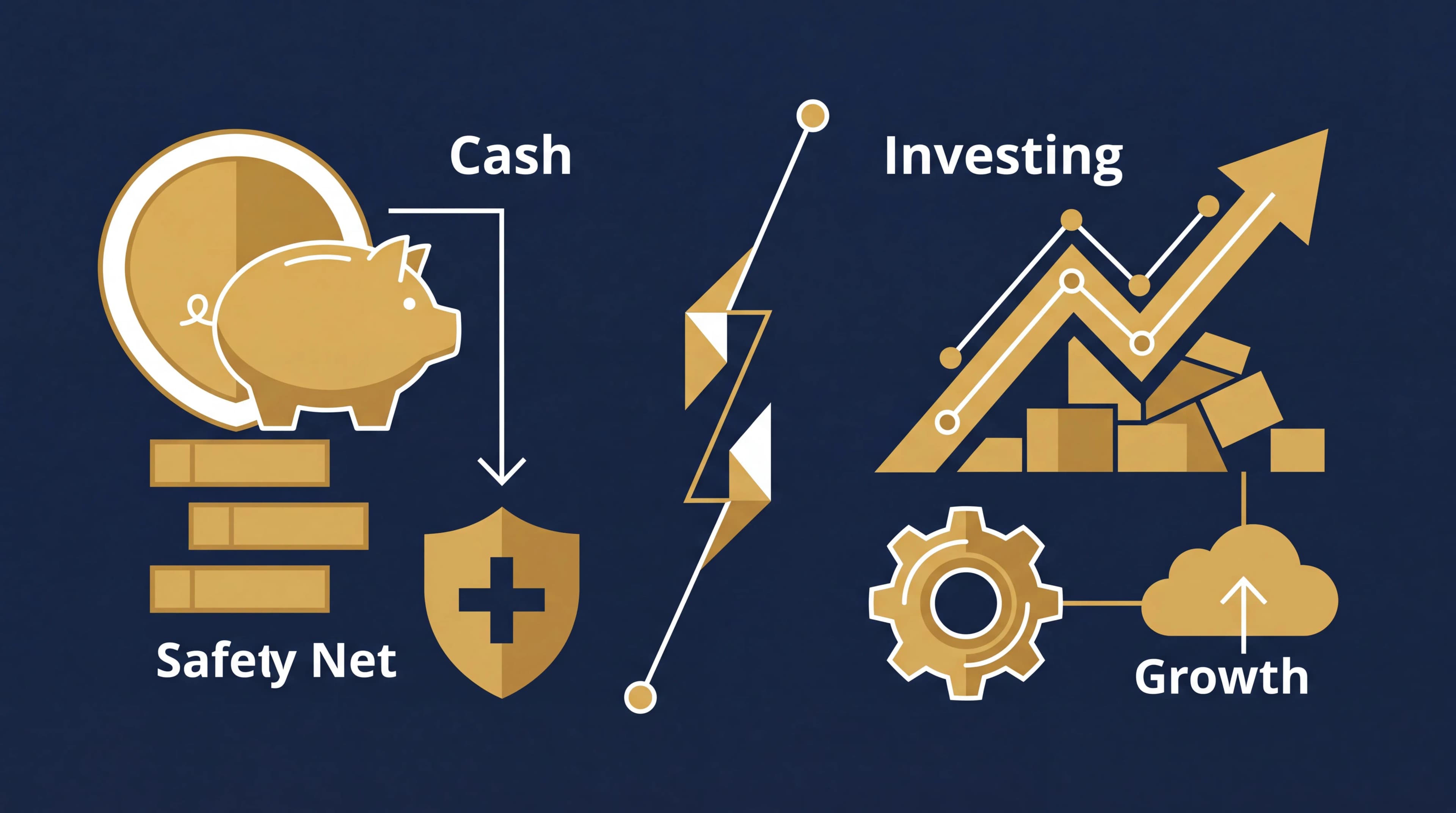
12 min read
Saving & InvestingCash vs Investing in 2026: When to Pause
Debating cash vs investing in 2026? With 24% of Americans holding zero emergency savings, pausing contributions...
Sammy Dynamo